
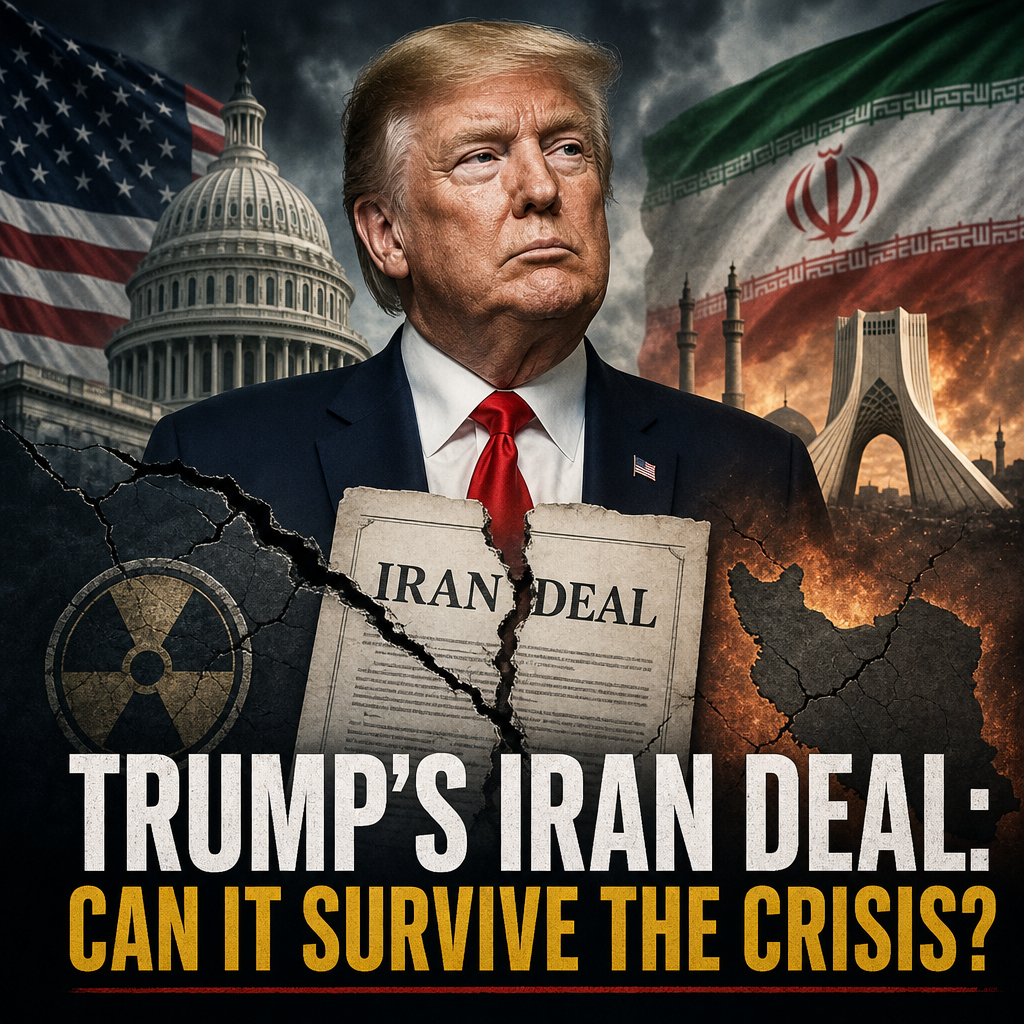
Trump’s Iran Deal: Can It Survive the Crisis?


Trump’s Iran deal sits at the center of a wider question that goes far beyond one agreement: can any nuclear arrangement survive when the regional environment keeps turning more dangerous?
The short answer is that it can survive only if the political incentives around it are still alive. That is the hard part. The longer answer is more complicated. Across coverage from Western, Middle Eastern, and state-aligned outlets, one theme keeps coming through: the deal is not simply a document on paper, but a living test of whether diplomacy can outlast pressure, mistrust, and confrontation.



Trump’s Iran deal and the problem of endurance
The original nuclear agreement, the Joint Comprehensive Plan of Action, was built on a basic bargain: Iran would limit parts of its nuclear program in exchange for sanctions relief. When Donald Trump withdrew the United States from the deal in 2018 and reimposed sanctions, the agreement was weakened dramatically, but not immediately erased. Iran stayed inside some limits for a time, then gradually reduced its compliance as the promised economic benefits vanished.
That history matters because it shows the deal did not fail in one dramatic moment. It unraveled step by step. That gradual decay is one reason some diplomats still see a narrow path for revival: if the crisis is managed carefully enough, the machinery of negotiations can remain intact. But the same history also explains the skepticism. Once trust collapses, every new round of talks has to overcome not just current tensions, but the memory of broken commitments.




Sky News’ reporting frames the issue in practical terms: the agreement’s future depends less on rhetoric than on whether the key parties believe they gain more from restraint than from escalation. That is a sobering calculation, because in moments of regional crisis, leaders often find political value in standing firm rather than compromising. A deal can survive technical disagreements. It is much harder to survive a climate where each side believes the other is acting in bad faith.
The regional crisis is not just background noise
What makes this moment especially fragile is that the nuclear file is no longer isolated. Any confrontation involving Iran now tends to intersect with wider regional violence, including conflict linked to Gaza, Hezbollah, maritime insecurity, and tensions involving U.S. interests. That creates a feedback loop: the more unstable the region becomes, the harder it is for negotiators to keep nuclear talks separate from security politics.
Al Jazeera’s coverage often places the issue inside this broader regional context, emphasizing that Iran, its adversaries, and outside powers are all operating within a much more volatile Middle East. From that perspective, the deal’s survival is not mainly about one signature agreement being technically alive or dead. It is about whether states can resist turning every crisis into an argument for maximum pressure. That is a tougher ask than it sounds.
There is also a domestic politics layer. In Washington, any revived deal faces criticism from those who argue it is too lenient, too temporary, or too vulnerable to another change of administration. In Tehran, leaders have to justify any concessions to a public that has endured sanctions, inflation, and limited relief. Those pressures make compromise look expensive on both sides.
What the competing viewpoints reveal
The sources taken together suggest at least three different ways of seeing the crisis:
– The pragmatic view: the deal is still useful because it creates a framework for managing Iran’s nuclear activities, even if it is imperfect.
– The skeptical view: the agreement is too weakened by politics and mistrust to provide real security, especially after past withdrawals and noncompliance.
– The strategic view: the deal is valuable mainly as a pause button, buying time while regional and diplomatic conditions remain unstable.
RT’s coverage tends to highlight the geopolitical struggle and the role of sanctions, often underscoring how U.S. pressure can harden Iranian positions. Whether one agrees with that framing or not, it reflects an important part of the debate: sanctions can force leverage, but they can also reduce the space for diplomacy if they convince the targeted state that concessions will never be reciprocated.
That is where the evidence becomes genuinely mixed. Sanctions have not produced a clean breakthrough. Nor has pressure eliminated Iran’s nuclear leverage. At the same time, the absence of a deal is not a neutral outcome; it increases the chances of miscalculation and could encourage further escalation. The core dilemma is that both accommodation and confrontation carry risks.
Why the deal may still matter
Even in its damaged state, the agreement still offers something important: predictability. Nuclear diplomacy is often less about friendship than about creating a set of rules that lowers the chance of surprise. If that structure disappears entirely, then the world is left with fewer tools for verifying intentions and more room for suspicion.
That does not mean revival is easy or even likely. Any new arrangement would probably need stronger verification, clearer enforcement, and some way to insulate it from the next political swing. But those are reasons to improve the deal, not abandon the idea of diplomacy altogether.
The biggest obstacle is not the absence of ideas. It is the absence of confidence. Each side doubts the other will honor commitments when the pressure rises. And in today’s crisis environment, pressure is constant.
So, can it survive?
The most honest answer is: maybe, but not in its old form unless the political climate changes. Trump’s Iran deal has already survived one collapse, but survival in a weakened state is not the same as functioning effectively. It may persist as a reference point, a negotiating framework, or a starting line for a future agreement. What it cannot do is survive indefinitely as a symbolic promise while real-world tensions keep intensifying around it.
For now, the agreement’s fate appears tied to three conditions:
1. Whether the major powers still see diplomacy as useful
2. Whether Iran believes sanctions relief is credible
3. Whether regional crises can be separated from nuclear talks
If those conditions worsen, the deal may linger only in name. If they improve, it could still form the basis of a more durable compromise. Either way, the lesson is clear: in the Middle East, nuclear diplomacy does not fail only because of the nuclear issue. It fails when the wider crisis makes patience seem weaker than confrontation.

























